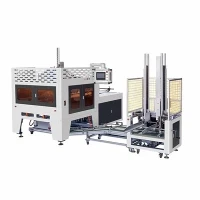
In rotary counting filler, photoelectric counting technology avoids errors caused by plate overlap by the following multi-dimensional design:
I. Dynamic Scanning and Signal Processing
Tablet Drop Detection: After adjustment by the vibrating feeder, the tablet slips continuously along the vibrating groove into discharge port, forming a tablet drop detection channel. The photoelectric sensor use infrared light to dynamically scan the signals generated as each tablet falls, converting them into electrical impulses that are then fed into high-speed microprocessors.
Pulse Signal Matching: The microprocessor compares pulse signals according to a preset program. Only when the number of input pulses equals a pre-selected number will a flip board action be triggered to guide the pill into the bottle. This process ensures that each pulse corresponds to a tablet, preventing overlapping signals from being misjudged as valid counts.
ii. Vibration Feeding Optimization
Three-Segment Vibrating Disc Electromagnetic Oscillation: The flow rate of the tablet is controlled in stages with an adjustable frequency electromagnetic vibration mechanism and a primary, intermediate, and final stage vibration feeder. High-speed vibrations ensure rapid separation of tablets, while a three-step track design allows tablets to slide down layer by layer, increasing spacing between tablets and reducing the likelihood of overlap.
Pulse Signal Matching: Microprocessors compare pulse signals using a preset program. Only when the number of input pulses equals a pre-selected number will a flip board action be triggered to guide the tablet into the bottle. This process ensures that each pulse corresponds to a tablet, preventing overlapping signals from being misjudged as valid counts. Track shape and spacing: The width of the vibrating trough plate matches the size of the plate, ensuring a single-row tablet arrangement. The narrow nozzle feed structure at the end of the trajectory further restricts the descent path of the tablet and prevents overlap due to lateral displacement.
III. Anti-jamming design: dust-resistant Infrared Dynamic Scanning: for high dust environment, anti-dust photoelectric sensing technology. By optimizing the wavelength of the light source (e.g., 520nm of green light) and the design of the light path, the scattering effect of dust on the light path is reduced, ensuring that the sensor also works steadily under dust interference.
Signal Filtering and Noise Reduction: This microprocessor uses a Kalman filter algorithm to suppress random noise in high-speed vibration. At the same time, feedback control adjusts optical path parameters (such as exposure time and gain) to compensate for system drift caused by ambient temperature and humidity changes and improve signal recognition accuracy.
IV. INTRODUCTION Mechanical Structure Assist: Precise Control Flip Mechanism: When the pulse count matches a pre-selected number, magnets drive the flip mechanism to rotate and guide the pill into the bottle. The flip motion is synchronized strictly with the pulse signal, ensuring that the flip mechanism opens only when a single tablet passes through, preventing accidental distribution of overlapping tablets.
Optimized Discharge Port Size: the discharge port diameter is slightly larger than the single plate size, and the edges are smooth and protruding, reducing overlap due to tablet jamming or rebound. Some devices have installed a flexible baffle at the outlet to further cushion the impact of the fall.
Typical application: With the above techniques, a certain type of rotary counting filler reduced the overlap rate of tablets from 5% to less than 0.2 per cent by adjusting the frequency of vibration and the shape of the trajectory, and increases accuracy of the count irregularly shaped tablets tablets (e.g. elliptical irregularly shaped tablets tablets) to 99.8%. At the same time, the device is able to operate steadily at dust concentrations above up to 10 mg/m3, in line with pharmaceutical industry GMP standards.
How Can Photoelectric Counting Technology Avoid Errors Caused By Overlapping Tablets in A Rotary Counting Filling Machine?
Feb 15, 2026
Leave a message
You Might Also Like