

In the pharmaceutical and nutraceutical industries, semi-auto capsule filling machines play a crucial role in efficiently and accurately filling capsules. As a trusted semi-auto capsule filling machine supplier, I understand the significance of the materials used in these machines. The choice of materials not only affects the machine's performance and durability but also ensures the quality and safety of the filled capsules. In this blog, I will delve into the various materials commonly used in semi-auto capsule filling machines and their importance.
Stainless Steel
Stainless steel is one of the most widely used materials in semi-auto capsule filling machines. Its popularity stems from its numerous advantageous properties. Firstly, stainless steel is highly resistant to corrosion, which is essential in the pharmaceutical environment where the machine may come into contact with various chemicals, powders, and liquids. This corrosion resistance ensures that the machine remains in good condition over a long period, reducing the risk of contamination from rust or other corrosion products.
Secondly, stainless steel has excellent strength and durability. It can withstand the mechanical stresses and wear and tear associated with the high - speed operation of the capsule filling process. The moving parts of the semi - auto capsule filling machine, such as the filling nozzles, turntables, and hoppers, are often made of stainless steel to ensure smooth and reliable operation.
Moreover, stainless steel is easy to clean and sanitize. In the pharmaceutical industry, maintaining strict hygiene standards is crucial to prevent cross - contamination between different batches of capsules. The smooth surface of stainless steel allows for easy removal of residues, and it can be effectively cleaned using standard cleaning agents and sterilization methods.
Many of our Semi - auto Capsule Filling Machine models extensively use high - quality stainless steel in their construction, from the main frame to the internal components. This material choice not only guarantees the machine's long - term performance but also meets the stringent quality requirements of our clients.
Polycarbonate
Polycarbonate is another important material used in semi - auto capsule filling machines, especially in areas where visibility is required. Capsule filling machines often have transparent covers or viewing windows made of polycarbonate. This material offers several advantages.
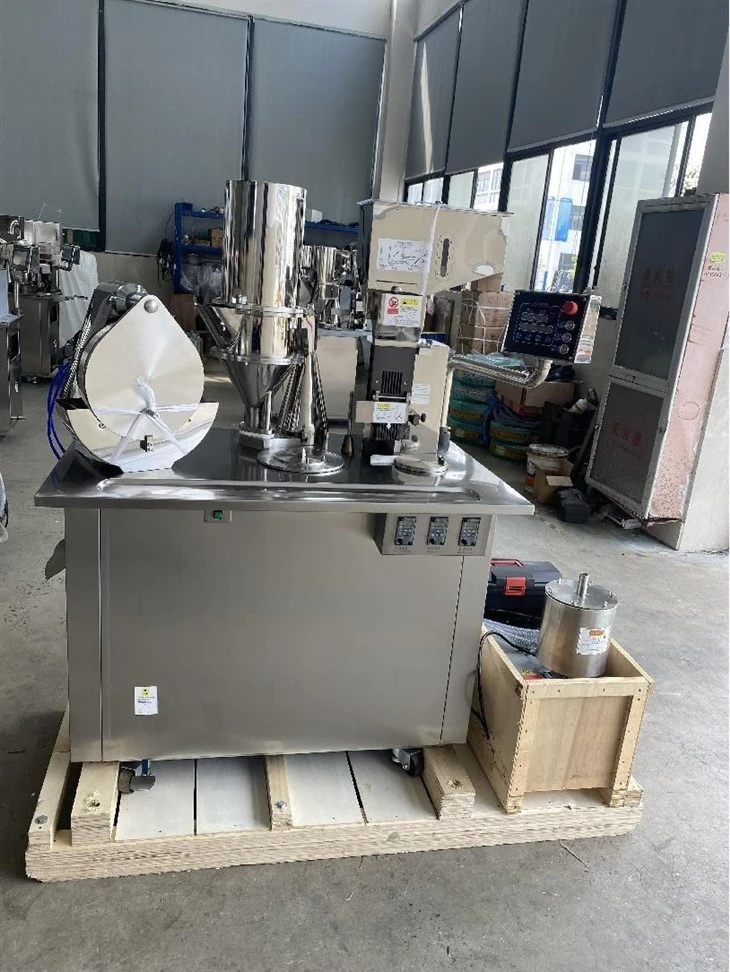

One of the key benefits of polycarbonate is its high transparency. Operators can easily observe the capsule filling process, including the alignment of capsules, the filling of powders or liquids, and the separation of the capsule bodies and caps. This visual inspection helps in quickly identifying any potential issues or malfunctions during the operation, ensuring the quality of the filled capsules.
Polycarbonate is also a strong and lightweight material. It can withstand impacts without shattering, which is important for protecting the internal components of the machine and ensuring operator safety. Additionally, it has good heat resistance, which allows it to maintain its properties even in the presence of the moderate heat generated during the machine's operation.
In our semi - auto capsule filling machines, we use polycarbonate for the viewing windows and some protective covers. This enables our customers to closely monitor the filling process, make necessary adjustments, and maintain a high level of quality control.
Engineering Plastics
Engineering plastics are widely used in semi - auto capsule filling machines for various components. These plastics are specifically engineered to have enhanced mechanical, thermal, and chemical properties compared to ordinary plastics.
For example, acetal (POM) is a common engineering plastic used in the machine's gears and bearings. Acetal has excellent wear resistance, low friction coefficient, and high dimensional stability. In the capsule filling process, the gears are responsible for transmitting power and ensuring the precise movement of different parts of the machine. The low friction of acetal reduces energy consumption and wear on the gears, resulting in a longer service life and more accurate operation.
Nylon is another engineering plastic used in semi - auto capsule filling machines. It is often used for making small parts such as spacers and guides. Nylon has good mechanical strength, toughness, and chemical resistance. It can withstand the forces and vibrations generated during the machine's operation and is resistant to many chemicals used in the pharmaceutical industry.
The use of engineering plastics in our semi - auto capsule filling machines helps to reduce the overall weight of the machine, lower production costs, and improve the efficiency and reliability of the operation.
Rubber and Sealing Materials
Rubber and sealing materials are essential for preventing leakage and ensuring the proper functioning of semi - auto capsule filling machines. In the capsule filling process, there are many areas where seals are required, such as between the hopper and the filling mechanism, and around the moving parts.
Silicone rubber is a commonly used sealing material. It has excellent flexibility, heat resistance, and chemical resistance. Silicone seals can withstand a wide range of temperatures and are resistant to many chemicals, making them suitable for use in the pharmaceutical environment. They can effectively prevent the leakage of powders or liquids, ensuring that the filling process is accurate and clean.
EPDM (Ethylene Propylene Diene Monomer) rubber is another popular choice for sealing applications. EPDM has good weather resistance, ozone resistance, and electrical insulation properties. It is also highly resistant to water and many chemicals, making it ideal for use in areas where the machine may be exposed to moisture or chemical agents.
In our semi - auto capsule filling machines, we use high - quality rubber and sealing materials to ensure that there is no leakage during the filling process. This not only improves the efficiency of the machine but also helps to maintain the quality and integrity of the filled capsules.
Electronic Components
In modern semi - auto capsule filling machines, electronic components play a vital role in controlling the operation and ensuring accuracy. These components are made from a variety of materials.
Printed circuit boards (PCBs) are an essential part of the machine's control system. They are typically made of fiberglass - epoxy or other composite materials. PCBs provide a platform for mounting electronic components such as microcontrollers, sensors, and relays. The fiberglass - epoxy material offers good electrical insulation, mechanical strength, and heat resistance, ensuring the reliable operation of the electronic circuits.
Sensors used in semi - auto capsule filling machines are made from various materials depending on their type. For example, optical sensors may use materials such as silicon for the photodetectors. These sensors are used to detect the presence and position of capsules, the level of powders in the hopper, and other important parameters during the filling process.
Relays and switches are made from materials such as copper for the conductive parts and plastic for the insulating parts. These components are responsible for controlling the electrical power and signals in the machine, ensuring that different functions are carried out in a coordinated manner.
Our semi - auto capsule filling machines are equipped with advanced electronic components to provide precise control and monitoring of the filling process. The use of high - quality materials in these components ensures the reliability and accuracy of the machine, meeting the high - tech requirements of the pharmaceutical industry.
Conclusion
The materials used in semi - auto capsule filling machines are carefully selected to ensure the machine's performance, durability, and the quality of the filled capsules. From stainless steel for its corrosion resistance and strength to polycarbonate for visibility, engineering plastics for mechanical components, rubber for sealing, and electronic components for control, each material plays a crucial role.
As a semi - auto capsule filling machine supplier, we are committed to using the best materials in our products. Our Semi - auto Capsule Filling Machine models, along with our 24 Channel Tablet Counting Machine and Single Feeder Semi - auto Capsule Filling Machine, are designed and manufactured to meet the highest industry standards.
If you are in the market for a reliable semi - auto capsule filling machine or other pharmaceutical equipment, we invite you to contact us for more information and to discuss your specific requirements. Our team of experts is ready to assist you in finding the best solution for your business.
References
- "Materials Science in Engineering" by Callister, William D.
- "Pharmaceutical Manufacturing Handbook: Production and Processes" edited by Suresh C. Gad.
- Industry - specific technical documents and research papers on capsule filling machines.