

In the packaging industry, desiccant bag feeders play a crucial role in ensuring the quality and longevity of products by controlling moisture levels. As a leading desiccant bag feeder supplier, I often receive inquiries about the capacity of a typical desiccant bag feeder. In this blog post, I will delve into the factors that influence the capacity of a desiccant bag feeder and provide a comprehensive understanding of what you can expect from these machines.
Understanding the Basics of Desiccant Bag Feeders
Before we discuss the capacity of a desiccant bag feeder, it's essential to understand what these machines do. A desiccant bag feeder is a specialized piece of equipment designed to dispense desiccant bags into various types of packaging, such as bottles, boxes, and pouches. Desiccants are substances that absorb moisture from the surrounding environment, helping to prevent the growth of mold, mildew, and bacteria, and protecting products from damage caused by humidity.
Desiccant bag feeders are commonly used in industries such as pharmaceuticals, food and beverage, electronics, and cosmetics, where maintaining a low humidity environment is critical for product quality and safety. These machines can handle a wide range of desiccant bag sizes and types, including silica gel, activated carbon, and molecular sieve desiccants.
Factors Affecting the Capacity of a Desiccant Bag Feeder
The capacity of a desiccant bag feeder refers to the number of desiccant bags it can dispense per unit of time, typically measured in bags per minute (BPM). Several factors can influence the capacity of a desiccant bag feeder, including:
1. Bag Size and Weight
The size and weight of the desiccant bags being dispensed are significant factors that affect the feeder's capacity. Larger and heavier bags require more time to handle and dispense, which can reduce the overall dispensing speed. Conversely, smaller and lighter bags can be dispensed more quickly, allowing for higher throughput.
2. Feeding Mechanism
The feeding mechanism of a desiccant bag feeder also plays a crucial role in determining its capacity. There are several types of feeding mechanisms available, including vibratory feeders, belt feeders, and pick-and-place systems. Each mechanism has its own advantages and limitations in terms of speed, accuracy, and reliability.
Vibratory feeders are commonly used for dispensing small to medium-sized desiccant bags. These feeders use vibration to move the bags along a track and into the packaging. Vibratory feeders can achieve high dispensing speeds, but they may not be suitable for handling larger or irregularly shaped bags.
Belt feeders are another popular option for desiccant bag feeding. These feeders use a conveyor belt to transport the bags from a hopper to the packaging. Belt feeders can handle a wide range of bag sizes and weights and can achieve high throughput rates. However, they may require more maintenance than vibratory feeders.
Pick-and-place systems are the most advanced type of desiccant bag feeder. These systems use robotic arms or other automated devices to pick up the bags from a stack or hopper and place them into the packaging. Pick-and-place systems offer high precision and flexibility but are typically more expensive and complex than other feeding mechanisms.
3. Packaging Speed
The speed at which the packaging line operates also affects the capacity of the desiccant bag feeder. The feeder must be able to keep up with the packaging speed to ensure that desiccant bags are dispensed accurately and consistently. If the feeder's capacity is lower than the packaging speed, it may cause bottlenecks in the production line and reduce overall efficiency.

4. Machine Design and Configuration
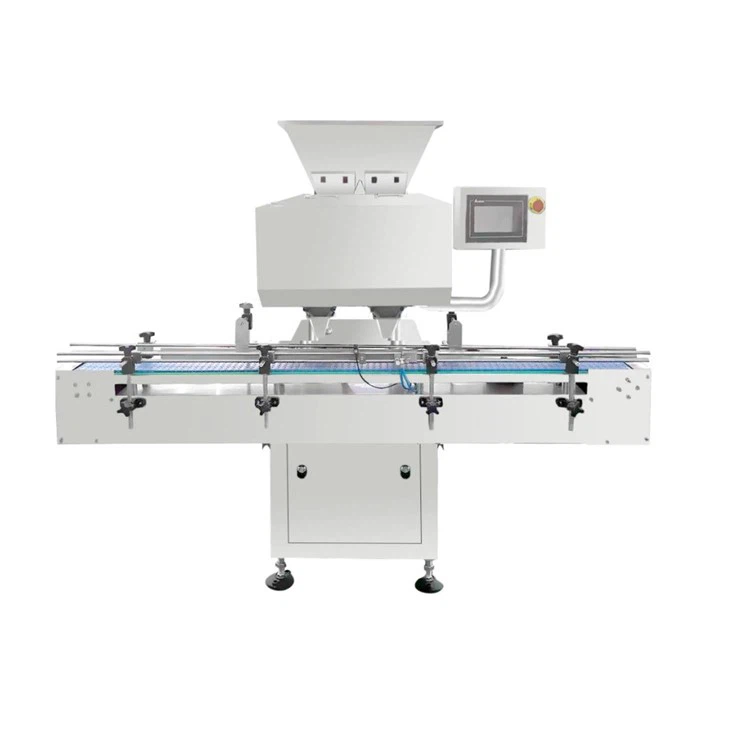
The design and configuration of the desiccant bag feeder can also impact its capacity. Factors such as the size and layout of the hopper, the number of feeding channels, and the presence of additional features (such as bag counting or inspection systems) can all affect the feeder's performance.
A well-designed desiccant bag feeder will have a large hopper capacity to minimize the need for frequent refilling. Multiple feeding channels can also increase the feeder's capacity by allowing it to dispense multiple bags simultaneously. Additionally, features such as bag counting and inspection systems can help ensure the accuracy and quality of the dispensing process.
Typical Capacity Range of Desiccant Bag Feeders
The capacity of a typical desiccant bag feeder can vary widely depending on the factors discussed above. In general, desiccant bag feeders can have a capacity ranging from a few bags per minute to several hundred bags per minute.
For small-scale operations or applications that require low dispensing speeds, a desiccant bag feeder with a capacity of 10 to 50 bags per minute may be sufficient. These feeders are typically compact and affordable and are suitable for use in laboratories, small manufacturing facilities, or packaging lines with low production volumes.
For medium to large-scale operations, desiccant bag feeders with a capacity of 50 to 200 bags per minute are more commonly used. These feeders can handle a wider range of bag sizes and weights and can be integrated into high-speed packaging lines.
For high-volume production applications, desiccant bag feeders with a capacity of 200 bags per minute or more may be required. These feeders are typically larger and more complex and may feature advanced feeding mechanisms and control systems to ensure high throughput and accuracy.
Our Desiccant Bag Feeders
As a desiccant bag feeder supplier, we offer a wide range of feeders with different capacities to meet the needs of various industries and applications. Our feeders are designed and manufactured using the latest technology and highest quality materials to ensure reliable performance and long service life.
In addition to desiccant bag feeders, we also offer a variety of other pharmaceutical machines, such as the Double Feeders Semi-auto Capsule Filling Machine, Rotate Tablet Press Machine, and 24 Channel Tablet Counting Machine. These machines are designed to improve the efficiency and accuracy of pharmaceutical packaging processes and are widely used in the pharmaceutical industry.
Contact Us for More Information
If you are interested in learning more about our desiccant bag feeders or other pharmaceutical machines, please contact us. Our team of experts will be happy to answer your questions and provide you with detailed information about our products and services. We can also help you select the right desiccant bag feeder for your specific needs and requirements.
Whether you are a small business looking for a cost-effective solution or a large corporation in need of a high-capacity feeder, we have the expertise and experience to meet your needs. Contact us today to discuss your packaging requirements and explore how our desiccant bag feeders can help improve your production efficiency and product quality.
References
- Packaging Machinery Manufacturers Institute (PMMI). (2023). Packaging Machinery Technology Roadmap.
- Singh, R. P., & Heldman, D. R. (2014). Introduction to Food Engineering. Academic Press.
- Mujumdar, A. S. (Ed.). (2014). Handbook of Industrial Drying. CRC Press.