

In the realm of pharmaceutical manufacturing, the efficient and accurate feeding of desiccants into capsules is of paramount importance. As a leading supplier of Column Desiccant Feeder, I am excited to delve into the feeding pattern of a column desiccant feeder and its significance in the industry.
Understanding the Column Desiccant Feeder
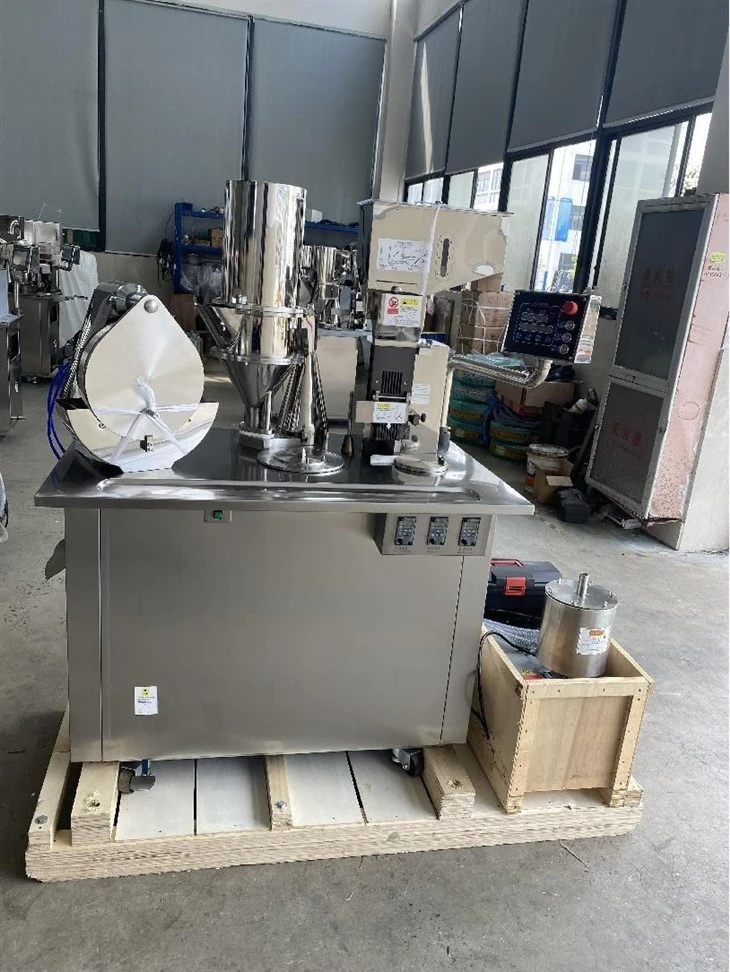
A column desiccant feeder is a specialized machine designed to precisely dispense desiccant materials into capsules. These desiccants play a crucial role in maintaining the quality and stability of pharmaceutical products by absorbing moisture and preventing degradation. The column desiccant feeder is a key component in the capsule filling process, ensuring that the correct amount of desiccant is added to each capsule.
The Feeding Pattern
The feeding pattern of a column desiccant feeder is a carefully orchestrated process that involves several key steps. Let's take a closer look at each of these steps:
1. Material Loading
The first step in the feeding pattern is the loading of the desiccant material into the feeder. This is typically done using a hopper or a similar device that can hold a sufficient quantity of desiccant. The hopper is designed to ensure a consistent flow of material into the feeder, preventing clogs and ensuring accurate dosing.
2. Metering
Once the desiccant material is loaded into the feeder, it is metered into the capsules. This is achieved using a metering device, such as a screw or a piston, that can accurately measure the amount of desiccant to be dispensed. The metering device is calibrated to ensure that the correct amount of desiccant is added to each capsule, based on the specific requirements of the pharmaceutical product.
3. Dispensing
After the desiccant material has been metered, it is dispensed into the capsules. This is typically done using a dispensing nozzle or a similar device that can accurately place the desiccant into the capsule. The dispensing nozzle is designed to ensure that the desiccant is evenly distributed within the capsule, preventing any clumping or uneven distribution.
4. Verification
Once the desiccant has been dispensed into the capsules, it is important to verify that the correct amount has been added. This is typically done using a weighing system or a similar device that can accurately measure the weight of the capsules. The weighing system is calibrated to ensure that the weight of the capsules is within the specified tolerance range, indicating that the correct amount of desiccant has been added.
5. Cleaning and Maintenance
After the feeding process is complete, it is important to clean and maintain the column desiccant feeder to ensure its continued performance. This is typically done by removing any residual desiccant material from the feeder and cleaning the components using a suitable cleaning solution. Regular maintenance, such as lubrication and calibration, is also important to ensure the accuracy and reliability of the feeder.
Advantages of the Column Desiccant Feeder
The column desiccant feeder offers several advantages over other types of desiccant feeding systems. Some of these advantages include:
1. Accuracy
The column desiccant feeder is designed to provide accurate dosing of desiccant materials, ensuring that the correct amount is added to each capsule. This helps to maintain the quality and stability of the pharmaceutical product, reducing the risk of degradation and ensuring consistent performance.
2. Efficiency
The column desiccant feeder is a highly efficient machine that can dispense desiccant materials at a high rate. This helps to increase the productivity of the capsule filling process, reducing the time and cost required to produce pharmaceutical products.
3. Flexibility
The column desiccant feeder is a flexible machine that can be easily adjusted to accommodate different types of desiccant materials and capsule sizes. This makes it suitable for a wide range of pharmaceutical applications, allowing manufacturers to produce a variety of products using a single machine.
4. Reliability
The column desiccant feeder is a reliable machine that is designed to operate continuously for extended periods of time. This helps to reduce downtime and maintenance costs, ensuring that the capsule filling process can run smoothly and efficiently.

Applications of the Column Desiccant Feeder
The column desiccant feeder is widely used in the pharmaceutical industry for a variety of applications. Some of these applications include:
1. Capsule Filling
The column desiccant feeder is commonly used in the capsule filling process to dispense desiccant materials into capsules. This helps to maintain the quality and stability of the pharmaceutical product, reducing the risk of degradation and ensuring consistent performance.
2. Tablet Coating
The column desiccant feeder can also be used in the tablet coating process to dispense desiccant materials onto the surface of tablets. This helps to prevent moisture from entering the tablets, reducing the risk of degradation and ensuring consistent performance.
3. Powder Filling
The column desiccant feeder can also be used in the powder filling process to dispense desiccant materials into powder containers. This helps to prevent moisture from entering the powder, reducing the risk of clumping and ensuring consistent performance.
Conclusion
In conclusion, the feeding pattern of a column desiccant feeder is a carefully orchestrated process that involves several key steps. The column desiccant feeder offers several advantages over other types of desiccant feeding systems, including accuracy, efficiency, flexibility, and reliability. It is widely used in the pharmaceutical industry for a variety of applications, including capsule filling, tablet coating, and powder filling.
If you are in the pharmaceutical industry and are looking for a reliable and efficient column desiccant feeder, please do not hesitate to contact us. We are a leading supplier of Column Desiccant Feeder and other pharmaceutical machinery, and we would be happy to discuss your specific requirements and provide you with a customized solution.
References
- Pharmaceutical Engineering Handbook, Second Edition, edited by James Swarbrick and James C. Boylan
- Handbook of Pharmaceutical Manufacturing Formulations, Volume 1: Tablets, edited by Sarfaraz N. Khadra and James T. Carstensen
- Pharmaceutical Dosage Forms: Tablets, Volume 1, Third Edition, edited by Herbert A. Lieberman, Leonard Lachman, and Joseph B. Schwartz